
Mungkin Anda Juga Suka
Berklee Holiday Videos
Top Videos
Personal, social and emotional development
Charlie and Lola - Season 1
Family Fun by CoComelon
Hank's Big Adventure!
CoComelon Lane! Brand New Netflix Kids Show!
Summer Songs for Babies! CoComelon Summertime
Learn English With Disney Movies
Test Your English with TV Series and Movies
Numberblocks Season 1 - Full Episodes
Film Indonesia
Charlie and Lola Full Episodes
How to Be a Better Human
Recent videos we think you’ll love
New Compilations | Chuggington
CoComelon #shorts
All New Akili & Me
Educational Cartoons for Kids | Learn with Sheriff Labrador
Sheriff Labrador New Episodes
SS 1 Mathematics
Sheriff Labrador - Kids Cartoon | Safety Cartoon for Kids
Nursery Rhymes | Words & Sounds
Primary 6 Mathematics
Komentar
4 Komentar
In this kickoff episode of Battle of the Branches, Professor Will Baude explores the evolving power of the executive branch and asks whether Congress and the states still serve as meaningful checks. Joined by Professor Bridget Fahey and Associate Professor Ruth Bloch Rubin, the conversation dives into federalism, legislative oversight, and the real dynamics behind the separation of powers today.
The latest installment of the @BattleoftheBranches series, this episode asks: Today it may seem to some people like we are seeing unprecedented conflicts with the executive branch. But are they really unprecedented? What have been the major past conflicts over federal power, or executive power (Jackson? Johnson? 20th Century?)? How did those conflicts change the country? Do they give us perspective on the conflicts today?
What is the scope of the President’s power over war and foreign policy? Are there any internal constraints – legal, political, institutional – on the President’s behavior toward other countries? Does the executive’s ability to operate in secret allow it to evade these potential constraints? Have these dynamics changed over time, and if so, why?
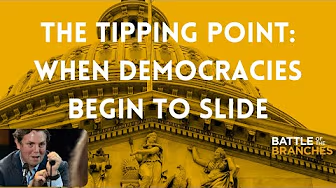
What are the threats to the norms and institutions of democracy, whether in America or around the world? When democracies weaken or die, does it happen suddenly or gradually? What are the first changes we might see? What are the causes? And what, if anything, can democracies do to stop it?