
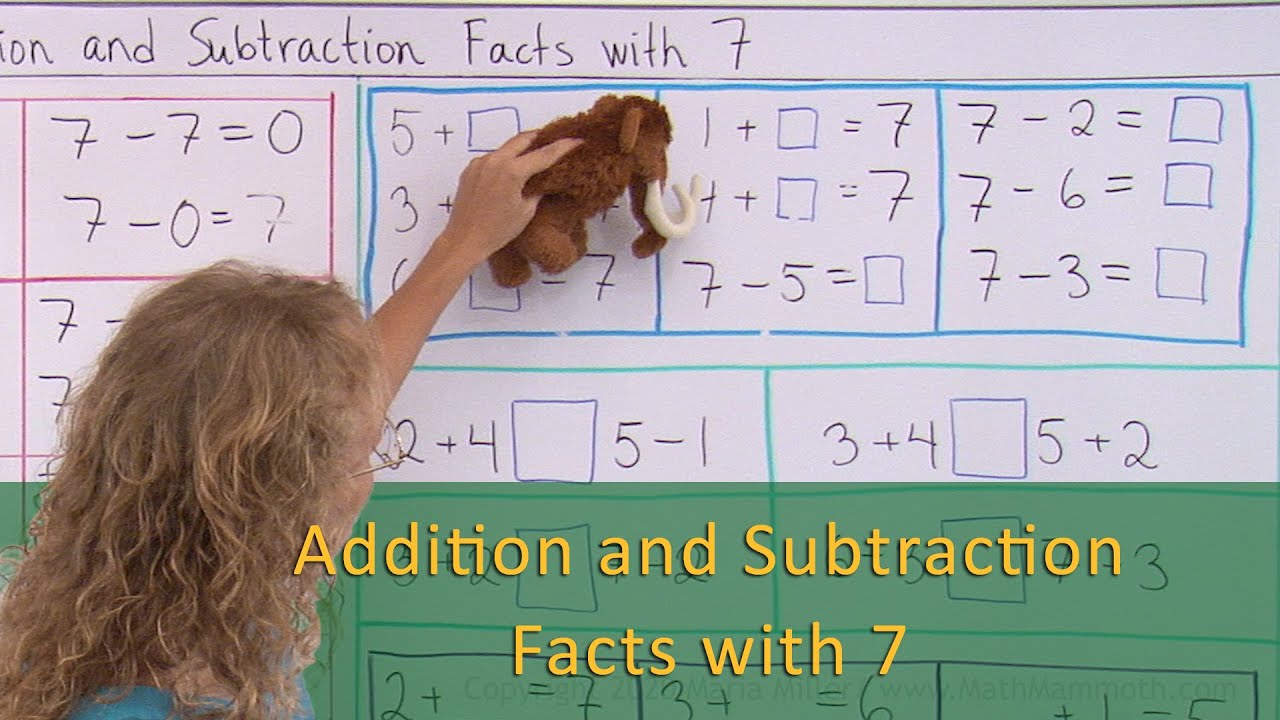
I show all the fact families with the sum of 7, organized into a table. Seeing the structure and the patterns in this manner helps develop number sense and helps children in the memorization work, also. Then we drill the facts for a bit. The lesson also includes an exercise where we compare expressions ("alligator mouths") and draw lines connecting facts from the same fact family.
आपको ये भी पसंद आ सकते हैं
CoComelon Lane | NEW Netflix Kids Show
ABC Videos: Write the Letter - Alphabet Writing Lessons for Children
CoComelon | Netflix Jr
Introduction to Artificial Intelligence (AI)
Year4 Maths
Year3 Maths
Year9 Maths
Year 3 Math
PrePrimary Maths
Year1 Maths
Year2 Maths
Year 11 Math
3rd Grade Math
How to Play Chess
3rd Grade Fractions
Algebra I Math Lessons
Algebra I | High School Math | Khan Academy
Math Videos for Kids
SEQUENCES AND SERIES
Sesame Street: Remembering Jerry Nelson
Year 2 Math
Year7 Maths
Year8 Maths
Year 7 Math
टिप्पणियाँ
8 टिप्पणियाँ
I show all the fact families with the sum of 9, organized into a table. Seeing the structure and the patterns in this manner helps develop number sense and helps children in the memorization work, also. Then we drill the facts for a bit. The lesson also includes a missing number exercise, an exercise where we compare simple addition and subtraction expressions, and word problems (with Mathy :^).
I show all the fact families with the sum of 9, organized into a table. Seeing the structure and the patterns in this manner helps develop number sense and helps children in the memorization work, also. Then we drill the facts for a bit. The lesson also includes a missing number exercise, an exercise where we compare simple addition and subtraction expressions, and word problems (with Mathy :^).
I show all the fact families with the sum of 6, organized into a table. Seeing the structure and the patterns in this manner helps develop number sense and helps children in the memorization work, also. Then we drill the facts for a bit. The lesson also includes an exercise where draw lines connecting facts from the same fact family, and a word problem.
I show all the fact families with the sum of 6, organized into a table. Seeing the structure and the patterns in this manner helps develop number sense and helps children in the memorization work, also. Then we drill the facts for a bit. The lesson also includes an exercise where draw lines connecting facts from the same fact family, and a word problem.
I show all the fact families with the sum of 8, organized into a table. Seeing the structure and the patterns in this manner helps develop number sense and helps children in the memorization work, also. Then we drill the facts for a bit. The lesson also includes an exercise of finding missing numbers (a little bit of algebra in disguise), and some word problems.
I show all the fact families with the sum of 8, organized into a table. Seeing the structure and the patterns in this manner helps develop number sense and helps children in the memorization work, also. Then we drill the facts for a bit. The lesson also includes an exercise of finding missing numbers (a little bit of algebra in disguise), and some word problems.
I show all the fact families with the sum of 7, organized into a table. Seeing the structure and the patterns in this manner helps develop number sense and helps children in the memorization work, also. Then we drill the facts for a bit. The lesson also includes an exercise where we compare expressions ("alligator mouths") and draw lines connecting facts from the same fact family.
I show all the fact families with the sum of 7, organized into a table. Seeing the structure and the patterns in this manner helps develop number sense and helps children in the memorization work, also. Then we drill the facts for a bit. The lesson also includes an exercise where we compare expressions ("alligator mouths") and draw lines connecting facts from the same fact family.