
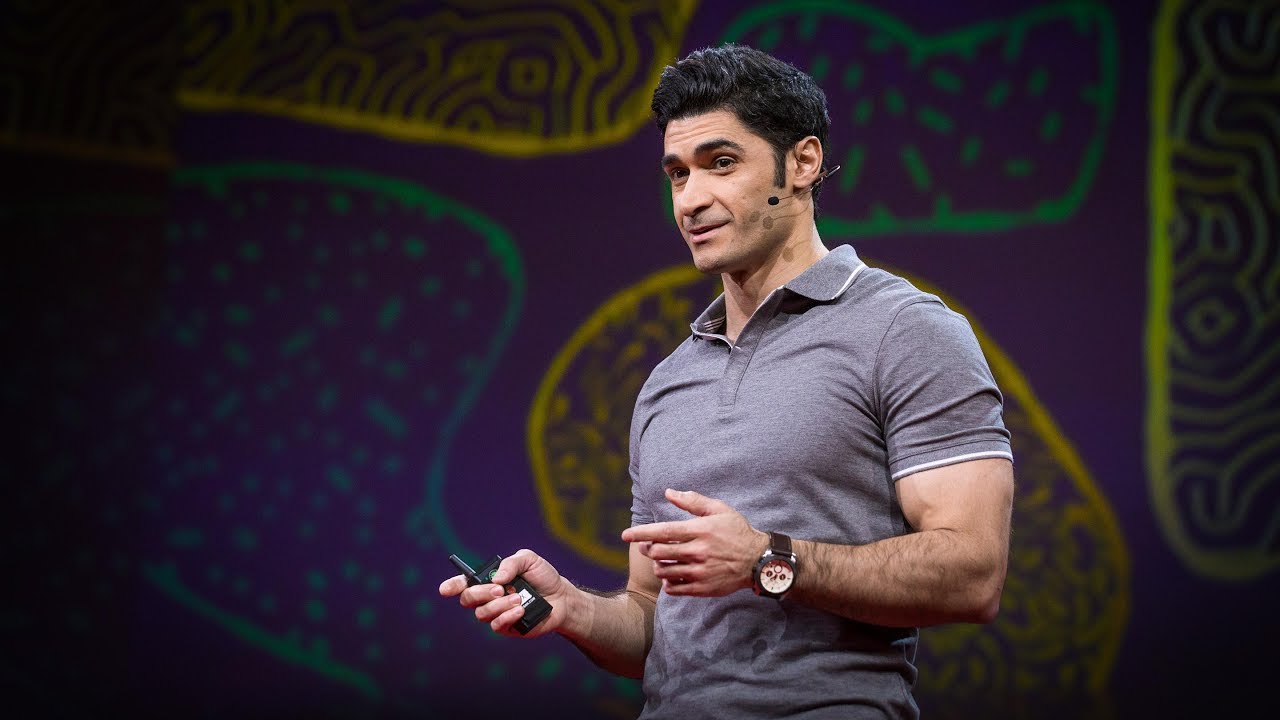
When you're doing something, what's your brain up to? Which neurons are firing where, and why? These fascinating talks will give you a hint.
Vous aimerez aussi
Family Fun by CoComelon
Hank's Big Adventure!
CoComelon Lane! Brand New Netflix Kids Show!
Summer Songs for Babies! CoComelon Summertime
Kids Songs by CoComelon
CoComelon
Alphabet (ABC) Songs by CoComelon
CocoMelon | Little Baby Bum | Blippi - Nursery Rhymes & Kids TV Shows
Psychology
How to boost your brain and memory
Crash Course At The Movies
Animals
Primary 1 English
SS 3 Chemistry
Kids Songs & Cartoons of Kitten Family | Kids Cartoon for Kids | BabyBus
JS 3 Mathematics
Talks about memory
When you need to feel awe about the world again
Spooky, creepy talks for Halloween
Menopause, decoded
Year7 German
Exams and revision
Bingo Songs! CoComelon Nursery Rhymes Mix
Toddlers & PreK Learning
Commentaires
10 commentaires
When two people are trying to make a deal -- whether they're competing or cooperating -- what's really going on inside their brains? Behavioral economist Colin Camerer shows research that reveals just how little we're able to predict what others are thinking. And he presents an unexpected study that shows chimpanzees might just be better at it than we are. (Filmed at TEDxCalTech.) TEDTalks is a daily video podcast of the best talks and performances from the TED Conference, where the world's leading thinkers and doers give the talk of their lives in 18 minutes (or less). Look for talks on Technology, Entertainment and Design -- plus science, business, global issues, the arts and much more. Find closed captions and translated subtitles in many languages at http://www.ted.com/translate Follow TED news on Twitter: http://www.twitter.com/tednews Like TED on Facebook: https://www.facebook.com/TED Subscribe to our channel: http://www.youtube.com/user/TEDtalksDirector
When two people are trying to make a deal -- whether they're competing or cooperating -- what's really going on inside their brains? Behavioral economist Colin Camerer shows research that reveals just how little we're able to predict what others are thinking. And he presents an unexpected study that shows chimpanzees might just be better at it than we are. (Filmed at TEDxCalTech.) TEDTalks is a daily video podcast of the best talks and performances from the TED Conference, where the world's leading thinkers and doers give the talk of their lives in 18 minutes (or less). Look for talks on Technology, Entertainment and Design -- plus science, business, global issues, the arts and much more. Find closed captions and translated subtitles in many languages at http://www.ted.com/translate Follow TED news on Twitter: http://www.twitter.com/tednews Like TED on Facebook: https://www.facebook.com/TED Subscribe to our channel: http://www.youtube.com/user/TEDtalksDirector
Brain imaging pioneer Nancy Kanwisher, who uses fMRI scans to see activity in brain regions (often her own), shares what she and her colleagues have learned: The brain is made up of both highly specialized components and general-purpose "machinery." Another surprise: There's so much left to learn. TEDTalks is a daily video podcast of the best talks and performances from the TED Conference, where the world's leading thinkers and doers give the talk of their lives in 18 minutes (or less). Look for talks on Technology, Entertainment and Design -- plus science, business, global issues, the arts and much more. Find closed captions and translated subtitles in many languages at http://www.ted.com/translate Follow TED news on Twitter: http://www.twitter.com/tednews Like TED on Facebook: https://www.facebook.com/TED Subscribe to our channel: http://www.youtube.com/user/TEDtalksDirector
Brain imaging pioneer Nancy Kanwisher, who uses fMRI scans to see activity in brain regions (often her own), shares what she and her colleagues have learned: The brain is made up of both highly specialized components and general-purpose "machinery." Another surprise: There's so much left to learn. TEDTalks is a daily video podcast of the best talks and performances from the TED Conference, where the world's leading thinkers and doers give the talk of their lives in 18 minutes (or less). Look for talks on Technology, Entertainment and Design -- plus science, business, global issues, the arts and much more. Find closed captions and translated subtitles in many languages at http://www.ted.com/translate Follow TED news on Twitter: http://www.twitter.com/tednews Like TED on Facebook: https://www.facebook.com/TED Subscribe to our channel: http://www.youtube.com/user/TEDtalksDirector
Brain imaging pioneer Nancy Kanwisher, who uses fMRI scans to see activity in brain regions (often her own), shares what she and her colleagues have learned: The brain is made up of both highly specialized components and general-purpose "machinery." Another surprise: There's so much left to learn. TEDTalks is a daily video podcast of the best talks and performances from the TED Conference, where the world's leading thinkers and doers give the talk of their lives in 18 minutes (or less). Look for talks on Technology, Entertainment and Design -- plus science, business, global issues, the arts and much more. Find closed captions and translated subtitles in many languages at http://www.ted.com/translate Follow TED news on Twitter: http://www.twitter.com/tednews Like TED on Facebook: https://www.facebook.com/TED Subscribe to our channel: http://www.youtube.com/user/TEDtalksDirector
The brain uses a quarter of the body's entire energy supply, yet only accounts for about two percent of the body's mass. So how does this unique organ receive and, perhaps more importantly, rid itself of vital nutrients? New research suggests it has to do with sleep. TEDTalks is a daily video podcast of the best talks and performances from the TED Conference, where the world's leading thinkers and doers give the talk of their lives in 18 minutes (or less). Look for talks on Technology, Entertainment and Design -- plus science, business, global issues, the arts and much more. Find closed captions and translated subtitles in many languages at http://www.ted.com/translate Follow TED news on Twitter: http://www.twitter.com/tednews Like TED on Facebook: https://www.facebook.com/TED Subscribe to our channel: http://www.youtube.com/user/TEDtalksDirector
The brain uses a quarter of the body's entire energy supply, yet only accounts for about two percent of the body's mass. So how does this unique organ receive and, perhaps more importantly, rid itself of vital nutrients? New research suggests it has to do with sleep. TEDTalks is a daily video podcast of the best talks and performances from the TED Conference, where the world's leading thinkers and doers give the talk of their lives in 18 minutes (or less). Look for talks on Technology, Entertainment and Design -- plus science, business, global issues, the arts and much more. Find closed captions and translated subtitles in many languages at http://www.ted.com/translate Follow TED news on Twitter: http://www.twitter.com/tednews Like TED on Facebook: https://www.facebook.com/TED Subscribe to our channel: http://www.youtube.com/user/TEDtalksDirector
Did you know that you're 30 times more likely to laugh if you're with somebody else than if you're alone? Cognitive neuroscientist Sophie Scott shares this and other surprising facts about laughter in this fast-paced, action-packed and, yes, hilarious dash through the science of the topic. TEDTalks is a daily video podcast of the best talks and performances from the TED Conference, where the world's leading thinkers and doers give the talk of their lives in 18 minutes (or less). Look for talks on Technology, Entertainment and Design -- plus science, business, global issues, the arts and much more. Find closed captions and translated subtitles in many languages at http://www.ted.com/translate Follow TED news on Twitter: http://www.twitter.com/tednews Like TED on Facebook: https://www.facebook.com/TED Subscribe to our channel: http://www.youtube.com/user/TEDtalksDirector