
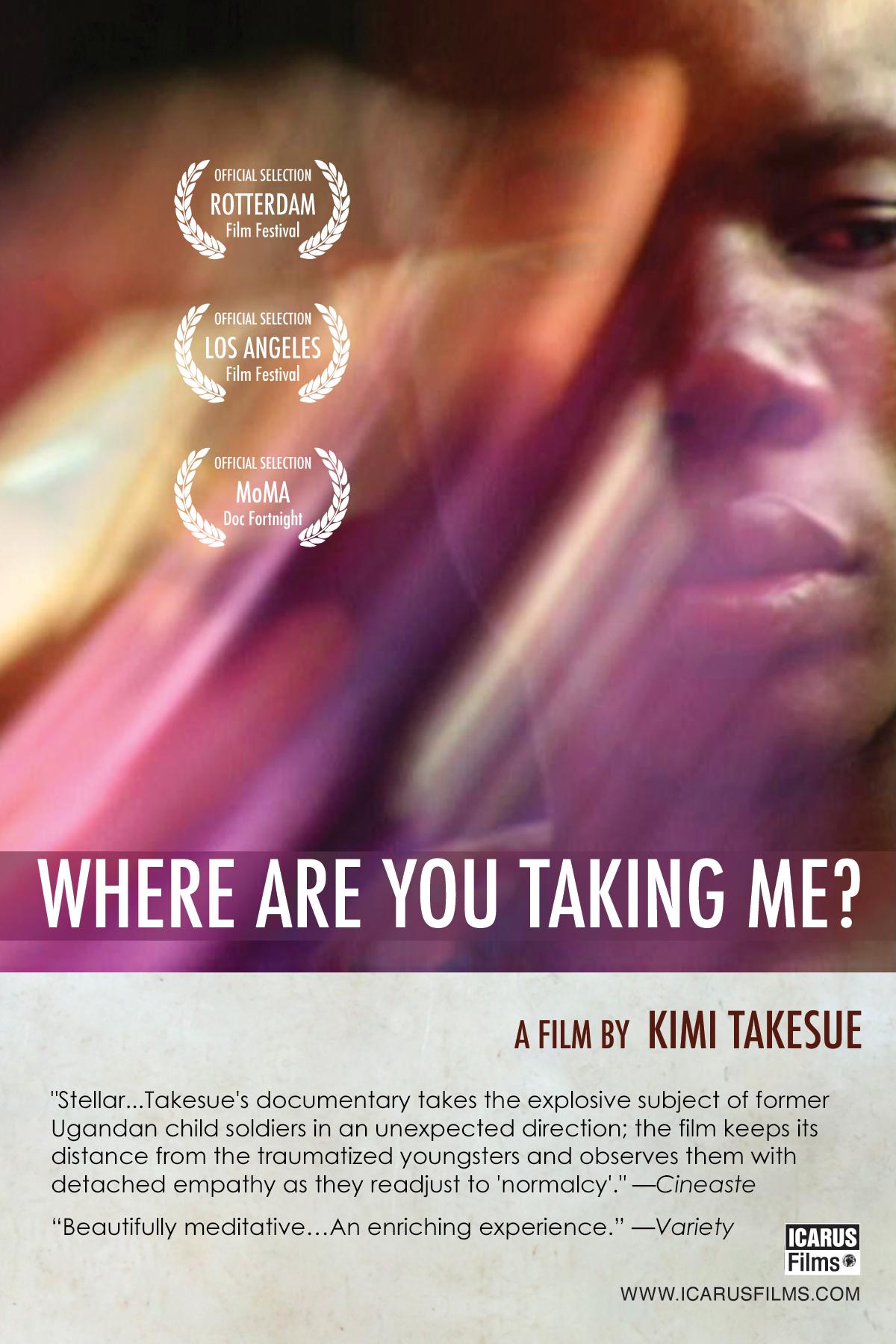
A high society wedding, bustling city streets, a center for former child soldiers, a nightclub full of music and laughter: these are the many faces of today's Uganda, as wonderfully captured by filmmaker Kimi Takesue. Whether exploring the pulsating energy of the city or contemplating quiet moments in the country, her artful camera compositions and the lyrical pacing of the film allow us to truly engage and process the foreign land on our own terms. Documenting Uganda while it deals with day-to-day realities and the aftermath of its civil wars, Takesue, well aware of her perspective as an outsider, strives for simple, unadorned honesty. Employing a largely observational style, Takesue allows the sight and sounds-and the people-of Uganda to speak for themselves. Usually the people she records simply ignore the camera, but when someone does engage-whether it's a group of school children clamoring for their moment in front of the lens or a young man asking the title question-the barriers between filmmaker, subject, and audience give way for breathtaking cinematic epiphanies.
الإعلان الترويجي
طاقم العمل
Kimi Takesue
Director
قد يعجبك أيضًا
Where Are You Taking Me?
Rat Film
Liberated: The New Sexual Revolution
Stripped: Las Vegas
Sex Next Door
تجارة المخدرات
Magic City: An American Fantasy
America's Sweethearts: Dallas Cowboys Cheerleaders
Kingdom
The Elf Prince Is My Baby Daddy
Poppy the Little Witch
Missions Commandos
Marines
Death of the Pastor's Wife
أغوي للقتل
Trust Me: The False Prophet
Top Guns: The Next Generation
Michael Jackson: The Verdict
Nelly & Ashanti: We Belong Together
Eat the Rich: The GameStop Saga
كشف المستور: مشاريع الأجسام الطائرة المجهولة
الإطاحة: الآريون الأمريكيون
Super/Natural
Should I Marry a Murderer?
التعليقات
8 تعليق
source: Where Are You Taking Me?
source: Where Are You Taking Me?
The title of this documentary tells it all. It's beautiful and it's contemplative and it has something for everyone to experience. Great job... Highly recommended. But you have to be willing to go with the film and let it take you. Once you do, you will be glad you did. The camera work is amazing. The people we are introduced to are amazing. And while the film is quiet, it is definitely stirring and provocative. I was moved many times during this film. I felt like I was there watching everything that was going on. The way the film flows just takes you over. I can't say enough about this film without going overboard. Well done. Peace.
source: Where Are You Taking Me?
'Where Are You Taking Me?' by award winning director Kimi Takesue is a low key observational style documentary that holds our attention from the opening sequence taken from the ideal observational redoubt of a hotel window balcony. The uncensored and unobtrusive view captures the poetry around the rhythm of daily urban life in a large African metropolis. Subsequent sequences are on ground level (or lower). Close and far. Observed and unobserved. The dialog is minimal. The images are the message. The only real verbal exchange on film is between the film maker and the boy who asks 'Where Are You Taking Me?' I really loved the sequence of the impromptu gymnasts and the closing encounter with the school children which provide a moving end. They and the movie linger long in the memory.
The title of this documentary tells it all. It's beautiful and it's contemplative and it has something for everyone to experience. Great job... Highly recommended. But you have to be willing to go with the film and let it take you. Once you do, you will be glad you did. The camera work is amazing. The people we are introduced to are amazing. And while the film is quiet, it is definitely stirring and provocative. I was moved many times during this film. I felt like I was there watching everything that was going on. The way the film flows just takes you over. I can't say enough about this film without going overboard. Well done. Peace.
'Where Are You Taking Me?' by award winning director Kimi Takesue is a low key observational style documentary that holds our attention from the opening sequence taken from the ideal observational redoubt of a hotel window balcony. The uncensored and unobtrusive view captures the poetry around the rhythm of daily urban life in a large African metropolis. Subsequent sequences are on ground level (or lower). Close and far. Observed and unobserved. The dialog is minimal. The images are the message. The only real verbal exchange on film is between the film maker and the boy who asks 'Where Are You Taking Me?' I really loved the sequence of the impromptu gymnasts and the closing encounter with the school children which provide a moving end. They and the movie linger long in the memory.