
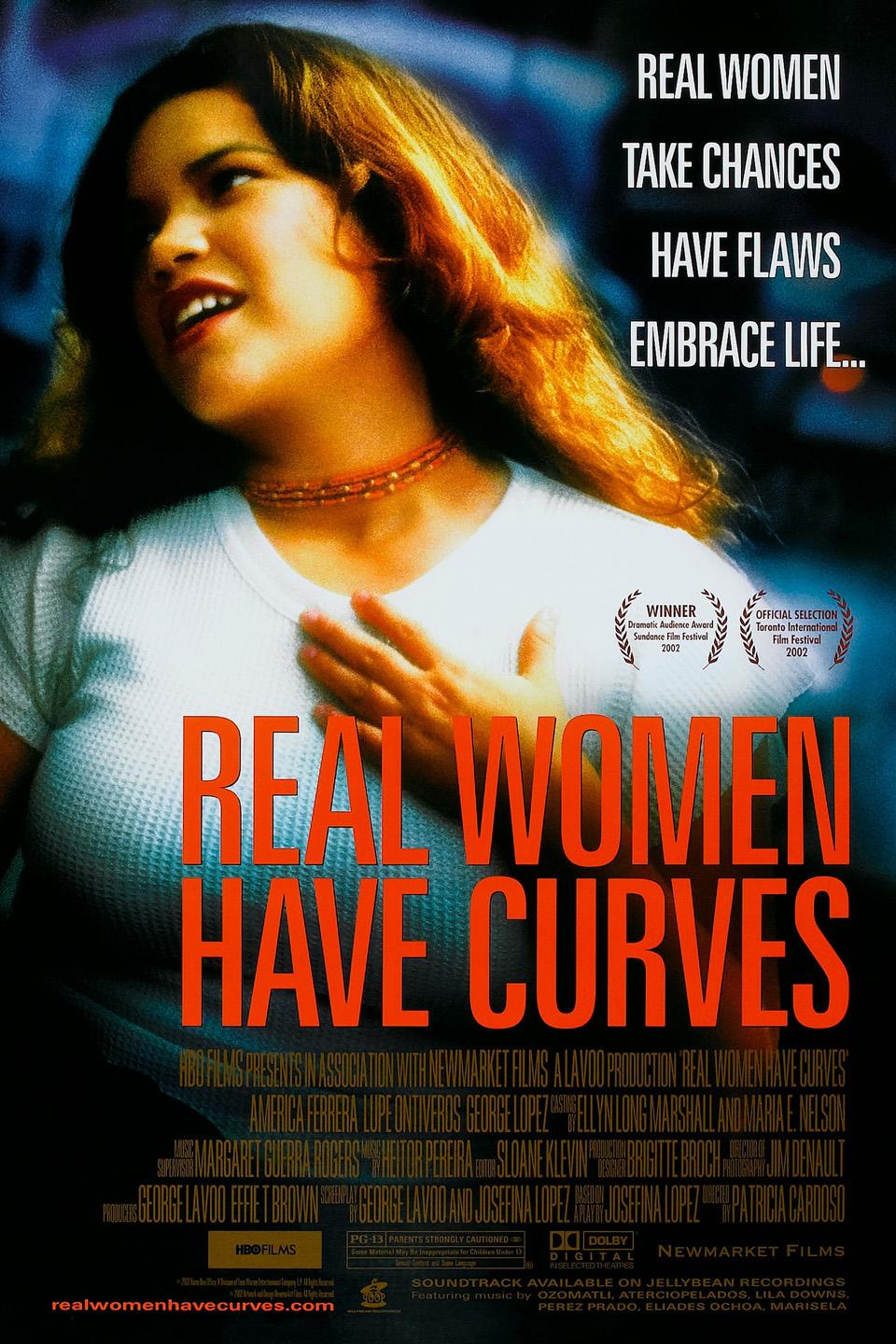
In East Los Angeles, an 18-year-old struggles between her ambitions of going to college and the desires of her domineering mother for her to get married, have children, and oversee the small, rundown family-owned textile factory.
ट्रेलर
कलाकार
Patricia Cardoso
Director
America Ferrera
Ana Garcia
Lupe Ontiveros
Carmen Garcia
Ingrid Oliu
Estela Garcia
George Lopez
Mr. Guzman
Brian Sites
Jimmy
Soledad St. Hilaire
Pancha
Lourdes Perez Nido
Rosali
Jorge Cervera Jr.
Raúl Garcia
Felipe de Alba
Grandfather
José Gerardo Zamora Jr.
Juan José
Edgar Lujan
Juan Martin
Lina Acosta
Norma
Celina Belizan
Glitz Receptionist
Ramona Garcia Coronado
Singing Woman
Marlene Forte
Mrs. Glass
Jim Ishida
Landlord
Agapito Leal
Dr. Lopez
Josefina Lopez
Veronica
Josefina Lopez
Writer
George LaVoo
Writer
आपको ये भी पसंद आ सकते हैं
I Love You Both
Best Man Down
The Good House
ExTerminators
It's CompliPlated
Ginny & Georgia
Suits
Elle
The Bold Type
All's Fair
Margo's Got Money Troubles
Grown-ish
Manifest
Average Joe
Queenie
How I Met Your Father
Roar
Easy
Glamorous
One Day at a Time
Mo
Red Band Society
Better Things
Life Sentence
टिप्पणियाँ
10 टिप्पणियाँ
source: Real Women Have Curves
**some minor spoilers** I was expecting to watch the film because of its awards at Sundance (Audience Award) and San Sebastian (Youth Award). Well, to be sincere it was mainly because of the San Sebastian one as I've had too many terrible experiences when confronting the tastes of the Utah festival jurors and audiences. Gosh! What an immense disappointment. I was interested by (and sympathetic to) the idea of the girl overcoming prejudices and difficulties because of her three most obvious characteristics (she's a young woman, she's fat, and has Latin American origin) and finally coming to terms with them and feeling proud of herself the way she is. Very cool. The BIG problem of the film is that ALL the sources of antagonism come from... HER PARENTS!!!! Absolutely amazing. She is a woman, but doesn't have any problem with being one apart that her parents are old fashioned in such an exaggerated way as to make them unbelievable. She's a second generation emigrant and member of an ethnic minority but her parents are the only ones that treat her like that. She's overweight, but this is not a problem for anyone but her mother who openly insults her because of the fat, oops, sorry, the fact. On the other hand, she studies at a Beverly Hills high school where, of course, nobody cares there about her being poor and Mexican and fat. She has a WASP boyfriend and a teacher who cares for her future more than her own parents. And, wonder of wonders, she gets a full scholarship at Columbia University which her parents despise. HA HA HA HA HA HA! You thought Matrix unbelievable? See this film. And don't forget the greedy businesswoman's origin (a clue: she speaks wonderful Spanish). Putting all the blame in the girl's "evil" (or at least "stupid") family confronted to a "well-intentioned" society is manipulative. One of the most admirable things of Americans is their believe that one can overcome any difficulties and get their dreams in the Land of Opportunities. I found this message very positive when dealt realistically. But naively treated it becomes a BIG lie. The lie appears when the insultingly uncritical filmmaker wants you to believe that in the Land of Opportunities nobody will care about you being an outsider and that any difficulties to overcome rest within you. Dear director and writers: society is like a pool full of sharks, there in North America, here in Europe and everywhere. Being women both the director and writer I expected the insider's experience, complete and meaningful. Not such a crap. The film is a pamphlet, a travel guide where (as all travel guides do) you show the good things while hiding the dark points, trying to convince people how good is the place you are traveling to compared to where you are coming from. It won't be much more terrible if the film had this tag line: Whites are good, darkies are bad, assimilated ones lie in between. Anyway, average production values. Good America Ferrera. Tiring Lupe Ontiveros just repeating herself. That's all.
I once read about an audition of models for an Armani fashion show. It appears the Milanese designer was rejecting everyone because he thought they were too fat to carry his clothes the way he intended. If anyone reading this comment is friendly with Giorgio, please advise him to avoid seeing this film. He's liable to have a series of strokes, or even a fatal heart attack! What Patricia Cardoso has achieved with this film is to clarify for us that indeed, beauty is in the eye of the beholder, and that we should not judge the person by the image they project. What might be considered fat and ugly for the same media that only glorify the skinny people that populate the pages of the different fashion magazines, for someone else will be beautiful. America Ferrera is a revelation. She exudes sweetness and the performance is right on the money. Her dreams to get out of the mediocrity of the factory life her mother wants for her are to be applauded because she has the smarts to make a career for herself and go to college. The great Lupe Ontiveros plays the mother. It's a shame that this actress haven't been discovered by more directors that will employ her talents in the way she deserves. She can bring so much to a film as proved in other independent films where she has appeared. Wherever she appears one can expect the very best from her. The rest of the cast is very good. We shall be looking forward to Ms. Cardoso's next venture with the confidence that whatever she undertakes it will be a fun time at the movies.
This never goes anywhere. Inoffensive, and adequately filmed, but nothing happens and no real story line - more of a sitcom without a start or end. Conversations seem to make up much of the film, but you won't follow much of the film unless you speak Spanish too - certainly my DVD version did not come with a subtitles option, which seems extraordinary. I was never gripped or even moved by this film. All a bit hammed up, and never really got going. It didn't have much message either - possibly it's okay to be fat? At the end you are just dropped with loads of loose ends. The good points were the background scenery and the Catholic touches, but if you really want this, you might do better to watch a documentary - at least you will understand the commentary!
The new millennium started promisingly: In 2002, we got to see America Ferrera, curvy, round and sexy like no other Hollywood film star at that time. Then, three exhaustingly long years later, the lover of Big Beautiful Women was highly awarded with Kylie Sparks, leading actress of "Pizza" (2005). And now? We have just buried the first decade of this millennium, and it looks less promising than ever. What can a lover of Big Women do besides consulting the pertinent special fashion magazines of BBWs, visiting the web sites of a few of them who are proud of flaunting with what they have gotten? In TV nor film you don't see them. They cannot make carrier unless they loose "willingly" the substance that turns them from being beautiful into being gorgeous. Unfortunately, so did Mrs. Ferrera. Allegedly, I have read, she looks more appealing than ever. A terrible lie! For a real lover of BBW's, watching one of the several sex-scenes in Hollywood movies is as enjoyable as watching a gay-striptease.
"Real Women Have Curves" concerns the generational gap that occurs in the abrasive relationship between a old-fashioned Hispanic mother and her daughter in contemporary Los Angeles. This impressive HBO Films release examines the place of women in twenty-first century society from the perspective of a rebellious young Latino teenager who refuses to follow in her mother's traditional footsteps; meaning, seek a man, a marriage, and the responsibility of rearing children. Instead, our heroine wants to attend college and rise about the lowly economic status that has paralyzed her parents and crippled her older sister who operates a sweat-shop where fashionable apparel is assembled for peanuts then sold for a fortune in a upper-scale name brand department store. No, "Real Women Have Curves" doesn't qualify as a formulaic mainstream comedy about a cute, sexy Anglo-Saxon star wading into and out of a series of romantic complications. Instead, this realistic, independent film deals with a teen who is overweight and struggles to resolve her own issues with her family as well as her future. Bogotá, Colombia, native Patricia Cardoso directed this insightful social drama with "MacArthur Park" scenarist Josefina Lopez and "A Dog Year" scribe George LaVoo. A bovine-looking America Ferrera delivers a sympathetic performance as the conflicted protagonist long before she achieved acclaim in the hit television series "Ugly Betty." Lupe Ontiveros is equally as good as her abusive mother who believes that she is doing what is best for her misguided daughter. Hispanic comedian George Lopez is restrained but effective as the heroine's high school English teacher who inspires her to go to college despite her dire shortage of financial aid. Among the issues that Ana (America Ferrera) and her mother Carmen (Lupe Ontiveros) quarrel about is her weight. Carmen has not had any luck getting her oldest daughter married off and she fears the worst for her youngest daughter. The action opens with Ana leaving high school after she graduates and facing an uncertain future. Her compassionate teacher wants her to pursue her education, but the demands of her family obstruct Ana's dreams. Carmen drives her daughter insane with her own demands. The scene in Estela's small sweat-shop factory when the ladies undress to proudly display their stretch marks and bulges is great. There is nothing contrived about this drama. Ultimately, "Real Women Have Curves" is a feminist film that pits female against female and the men stand out as sympathetic.
I was assigned to watch Real Women Have Curves for one of my college classes. So I popped it in and got comfortable. I enjoyed the scenery and the music. I did not enjoy Carmen, Ana's mother. I'm supposing that was just her character; but, wow. She's one hell of a mom. I've read other reviews of this movie and other people seem to enjoy the scene where Ana and the other factory workers strip down and show their scars to the others. Carmen gets upset and is astonished that none of them are ashamed to show their bodies. Ana proclaims, "This who we are. Real Women!" So is she saying skinner woman are not real? I was quite disturbed by this notion. By the end, I was upset. I know that this movie was supposed to make women of all types feel beautiful; but, it just made angry. Why are bigger women the only ones who are real? The movie was basically saying to me that if you can fit into a size 7(and I'm not saying I personally can) than you're not real. You're fake and you must starve yourself. Skinny women eat too, they might just have a faster metabolism. They're sorry. Needless to say, this movie disappointed me greatly.
A plus-sized Mexican-American teen(America Ferrera)is troubled between accepting a full scholarship to Columbia University and bowing to the pressure of her mother(Lupe Ontiveros)to work in the sewing sweatshop owned by her sister(Ingrid Oliu). The most memorable scene is no doubt when the half dozen or so workers in the sweatshop strip down to panties and bras in acceptance of their own bodies. George Lopez plays the teacher that helps make the scholarship possible. Also in the cast are Lourdes Perez and Felipe de Alba. Chick flick...duh, I guess so; but interesting anyway.
Real Women Have Curves is a very enjoyable film, and also a very real film. It deals with very real issues concerning women and especially young women. The main character is of the Hispanic persuasion and though she is a very bright girl and could possibly get into a good collage she runs the risk of being swallowed up in the death trap job of making dresses that cost them 18 dollars to make but get sold in department stores for 800 dollars. Her mother keeps telling her she's overweight overlooking the fact that she is heavier than her daughter. This film is very much set in the real world, and the problems facing the characters are problems we all face at one time or another like "can I pay the rent on time?" or "will this person like me for who I am instead of what I look like?" Within the context of the film the answers to those questions are yes, and yes which may be one of the reasons this film is so enjoyable. America Ferrera's performance is reminiscent of the kind of girl you would see at your local high school, and the message of this movie is one that more people should take to heart. Be who you are, not who others want you to be, follow your dreams, and the like. I was surprised with how frankly this film deals with teenage sexuality, and how it challenges the concept of what beauty is in modern culture makes it a very progressive film indeed.