
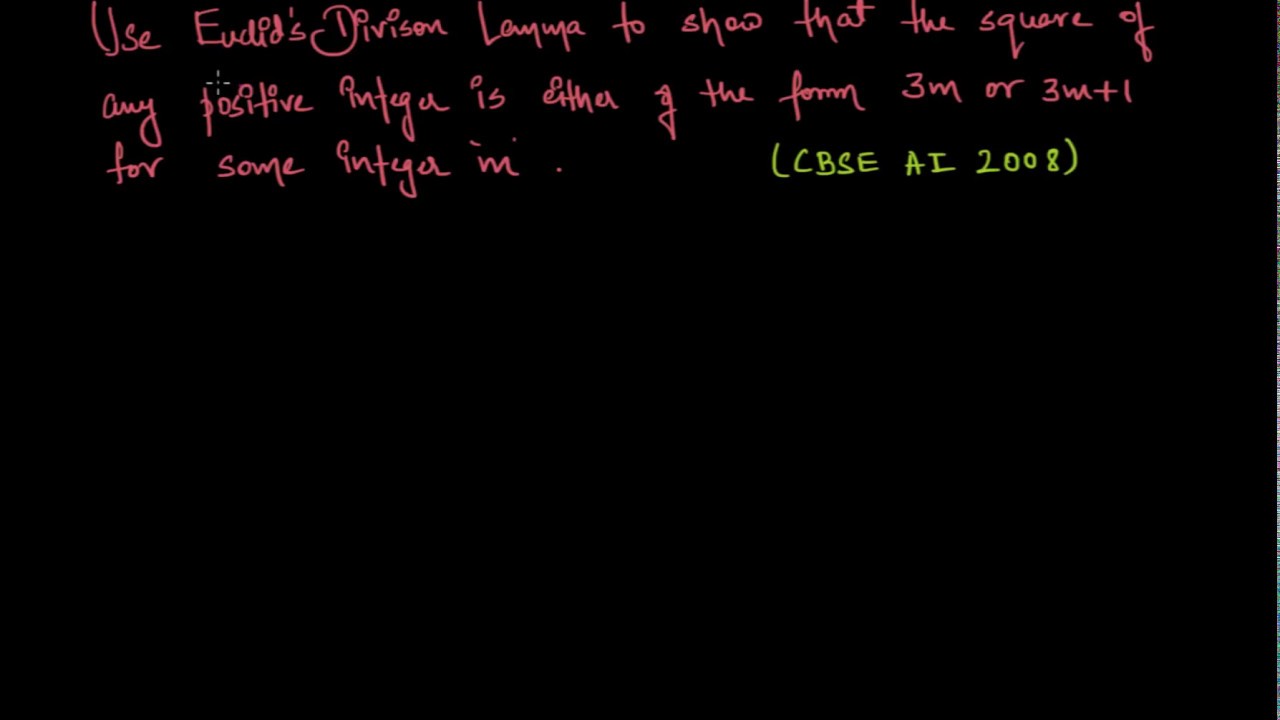
Previous year questions | Class 10 math (Hindi) | Khan Academy
قد يعجبك أيضًا
SSC Math part 1 video - Maharashtra board video
CBSE/NCERT Maths for Class 5 (English)
Class 10th Maths 2 One Shot 2026 - Pravin Sir
CBSE Class 10 Sample Paper for 2023 Boards - Maths Standard
Pry5 Math
Quadratic functions
JSS 3 Junior Mathematics
Mathematics (Junior Secondary School 1)
Uday Fastrack 2026 (Class 11th) Mathematics
Class 4th Maths || Exam Express
2024-25 chapter 9 Applied maths class 12 Probability
Class 5 Maths
FAMILY FIRST
Kids Funny Videos with Chutty Kannamma #Shorts
Top 12 Sellers
PrePrimary Maths
SSS10 Math
Celebrating STEM: counting and multiplication
Year1 Maths
Year5 Maths
Grade 12 Mathematics
SS3 Further Mathematics
JSS3 Mathematics
CBSE/NCERT Maths for Class 4 (English)
التعليقات
10 تعليق
The ratio of the sums of first m terms and first n terms of an arithmetic progression is m^2: n^2 Show that the ratio of its mth and nth terms is (2m-1) : (2n-1)
The ratio of the sums of first m terms and first n terms of an arithmetic progression is m^2: n^2 Show that the ratio of its mth and nth terms is (2m-1) : (2n-1)
The first and the last terms of an arithmetic progression are 8 and 350 respectively. If its common difference is 9, how many terms are there and what is their sum?
The first and the last terms of an arithmetic progression are 8 and 350 respectively. If its common difference is 9, how many terms are there and what is their sum?
If the sum of first q terms of an arithmetic progression is 2q + 3q^2 What is the common difference?
If the sum of first q terms of an arithmetic progression is 2q + 3q^2 What is the common difference?
The sum of three numbers in arithmetic progression is 12 and sum of their cubes is 288. Find the numbers.
The sum of three numbers in arithmetic progression is 12 and sum of their cubes is 288. Find the numbers.
The digits of a positive number of three digits are in arithmetic progression and their sum is 15. The number obtained by reversing the digits is 594 less than the original number. Find the number.
The digits of a positive number of three digits are in arithmetic progression and their sum is 15. The number obtained by reversing the digits is 594 less than the original number. Find the number.