
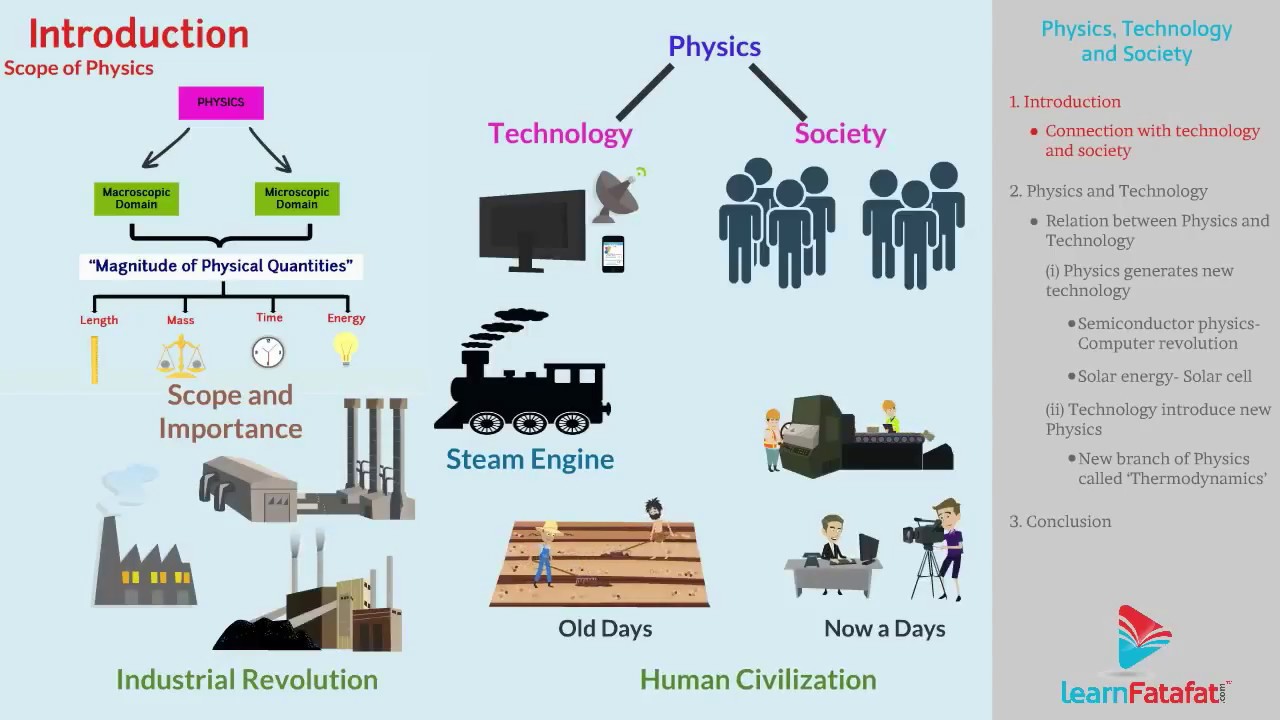
CBSE Class 11 Physics video course for IIT-JEE and NEET exam preparation by LearnFatafat.com Full class 11 and class 12 Physics course is available on https://learnfatafat.com/cbse-class-xi/ CBSE Class 11 Physics Syllabus - Chapter 1 Physical World Chapter 2 Units and Measurement Chapter 3 Motion in a Straight Line Chapter 4 Motion in a Plane Chapter 5 Laws of Motion Chapter 6 Work, Energy and Power Chapter 7 System of Particles and Rotational Motion Chapter 8 Gravitation Chapter 9 Mechanical Properties of Solids Chapter 10 Mechanical Properties of Fluids Chapter 11 Thermal Properties of Matter Chapter 12 Thermodynamics Chapter 13 Kinetic Theory Chapter 14 Oscillations Chapter 15 Waves
Mungkin Anda Juga Suka
Motu Patlu New Episodes 2021
Class 1 English Grammar
Python for Class 12 (Apni Kaksha)
The Adventures of Motu Patlu : Season 1
ChuChu TV Classics - Popular Nursery Rhymes & Kids Songs
Computer Basics
Class 4 English Grammar
Mighty Raju's Action Time
12th Physics कक्षा 12 भौतिक विज्ञान - हिन्दी माध्यम, NCERT || Complete Lectures in Sequence || || Ashish Singh Lectures || ASP SIR
PHYSICS Class 11th || PACE SERIES
NEEV 3.0 2026 (Class 9th) Physics
Uday Fastrack 2026 (Class 11th) Physics
Motion Class 9 Physics
SSLC PHYSICS 2026-27
Class 11 Physics Chapter 2 Units & Measurements | NCERT Solutions
Class 11 Physics for JEE Main, JEE Advanced & NEET | Onion Physics
SS 1 Physics
SS 3 Physics
SS 2 Physical
SS 3 Physical
Learn Basic Computer in Hindi Basic to Advance Level
Class 3 English Grammar
Best Trading Strategy for Crypto
5 EASIEST Ways to Make Money With AI (No One is Doing This)
Komentar
10 Komentar
Laws of Motion Class 11 Physics - The Law Of Inertia
Laws of Motion Class 11 Physics - The Law Of Inertia
Motion in a Straight Line Class 11 Physics - Motion In A Plane - Acceleration
Motion in a Straight Line Class 11 Physics - Motion In A Plane - Acceleration
Units and Measurements - Significant Figures Measurement of any physical quantity gives out a number. Suppose, measurement of time period of simple pendulum is 02.71 s. If you carefully look at this number then you will come to know that the information is reliably conveyed by last three digits only and the first digit is unnecessary. So, we can say that, there are three significant figures in this number. In simple words, The number of figures, present in any value, which are known with some degree of reliability known as the significant figures. Rules for determining significant figures, The change of unit, does not change the number of significant figures. e.g. 3.561 m has four significant figures. Even if we change the unit i.e. 356.1cm or 3561 mm.still the number of significant figures will be four. All non-zero digits are significant. e.g. the number 4587 has four significant figures. All zeros between the non zero digits are significant. e.g. 4.05 has three significant fig
Units and Measurements - Significant Figures Measurement of any physical quantity gives out a number. Suppose, measurement of time period of simple pendulum is 02.71 s. If you carefully look at this number then you will come to know that the information is reliably conveyed by last three digits only and the first digit is unnecessary. So, we can say that, there are three significant figures in this number. In simple words, The number of figures, present in any value, which are known with some degree of reliability known as the significant figures. Rules for determining significant figures, The change of unit, does not change the number of significant figures. e.g. 3.561 m has four significant figures. Even if we change the unit i.e. 356.1cm or 3561 mm.still the number of significant figures will be four. All non-zero digits are significant. e.g. the number 4587 has four significant figures. All zeros between the non zero digits are significant. e.g. 4.05 has three significant fig
Units and Measurement Class 11 Physics - Combination Of Errors Error Of A Sum Or Difference Consider two physical quantities A and B. The values of these quantities are given as A △A, B△B. where △A and △B are the absolute errors. Let us find Error of a Sum: take the third quantity Z such that Z = A + B for which △Z is the resultant error due to sum of errors. Adding the two physical quantities we get, Z△Z = (A △A) + (B△B) i.e. Z△Z = (A+B) (△A + △B) The maximum possible error △Z = △A + △B … (1) in case of error of a difference: we will subtract the two physical quantities. i.e. Z △Z = (A △A) - (B△B) = (A-B) -( △A △B) = (A-B) - (△A △B) since △B = △B = (A-B) (△A + △B) the maximum possible error in Z will be △Z = △A + △B … (2) Conclusion: From (1) and (2) we can conclude that, when two quantities are added or subtracted, the resultant absolute error in the final result will be the sum of individual absolute errors of different quantities. Example: The temperature is measu
Units and Measurement Class 11 Physics - Combination Of Errors Error Of A Sum Or Difference Consider two physical quantities A and B. The values of these quantities are given as A △A, B△B. where △A and △B are the absolute errors. Let us find Error of a Sum: take the third quantity Z such that Z = A + B for which △Z is the resultant error due to sum of errors. Adding the two physical quantities we get, Z△Z = (A △A) + (B△B) i.e. Z△Z = (A+B) (△A + △B) The maximum possible error △Z = △A + △B … (1) in case of error of a difference: we will subtract the two physical quantities. i.e. Z △Z = (A △A) - (B△B) = (A-B) -( △A △B) = (A-B) - (△A △B) since △B = △B = (A-B) (△A + △B) the maximum possible error in Z will be △Z = △A + △B … (2) Conclusion: From (1) and (2) we can conclude that, when two quantities are added or subtracted, the resultant absolute error in the final result will be the sum of individual absolute errors of different quantities. Example: The temperature is measu
Units and Measurement Class 11 Physics - Absolute Error, Relative Error, Percentage Error Numerical Question: From the experiment of measuring the time period of simple pendulum, the successive measurements for time period are 2.54s, 2.36s, 2.60s. Find absolute errors, relative error and percentage error. Answer: amean=2.54+2.36+2.603 s = 7.50/3 = 2.50 s absolute errors △a1=a1-amean = △a1=2.54-2.50 s = △a1=0.04 s similarly, △a2=2.36-2.50 s= (-0.14) s △a3=2.60-2.50 s= 0.10 s mean absolute error, Δamean= |Δa1|+|Δa2|+ ... + |Δan|n Δamean= 0.04+ 0.14 + 0.103s= 0.093s = 0.09s Relative error = Δameanamean=0.092.50=0.03 Percentage Error, δa= Δameanamean 100 % = 0.092.50100=3%
Units and Measurement Class 11 Physics - Absolute Error, Relative Error, Percentage Error Numerical Question: From the experiment of measuring the time period of simple pendulum, the successive measurements for time period are 2.54s, 2.36s, 2.60s. Find absolute errors, relative error and percentage error. Answer: amean=2.54+2.36+2.603 s = 7.50/3 = 2.50 s absolute errors △a1=a1-amean = △a1=2.54-2.50 s = △a1=0.04 s similarly, △a2=2.36-2.50 s= (-0.14) s △a3=2.60-2.50 s= 0.10 s mean absolute error, Δamean= |Δa1|+|Δa2|+ ... + |Δan|n Δamean= 0.04+ 0.14 + 0.103s= 0.093s = 0.09s Relative error = Δameanamean=0.092.50=0.03 Percentage Error, δa= Δameanamean 100 % = 0.092.50100=3%