
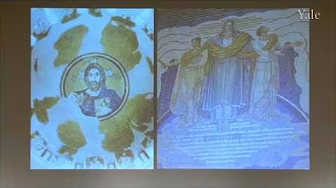
"Byzantium/Modernism" investigates the prolific interest in the Byzantine at the turn of the century and its effects on art and architecture up to the present. These talks open a discussion as to how Byzantine art and philosophy can contribute to modern and contemporary visual culture in the light of new media and their technologies
Vous aimerez aussi
CoComelon Lane | NEW Netflix Kids Show
ABC Videos: Write the Letter - Alphabet Writing Lessons for Children
CoComelon | Netflix Jr
Introduction to Artificial Intelligence (AI)
Learn English With Disney Movies
Test Your English with TV Series and Movies
🎬⭐️ BRAND NEW Episodes | Talking Tom Shorts: Season 3 🤣💙
English with TV Series (Kids Appropriate)
CoComelon #shorts
All New Akili & Me
Educational Cartoons for Kids | Learn with Sheriff Labrador
Sheriff Labrador New Episodes
Pinkfong! 👻NEW👻 Halloween Songs & Stories (Zombie Sharks, Monsters, Vampires)
Year5 Music
Year6 Music
African
Nursery Rhymes & Kids Cartoon (All!!) | Kiki and Miumiu | Baby Shark | Fire Truck | Top Playlist - Nursery Rhymes & Kids Songs by BabyBus
JS 3 Mathematics
Learn English with Movies
Primary 4 Mathematics
Personal, social and emotional development
Let's Relax with Sarah and Duck
Charlie and Lola - Season 1
Animal Fairy Tales: Season 3 (An ebook of 25 stories)
Commentaires
4 commentaires
This video contains Marie-José Mondzain's keynote lecture at the Byzantium/Modernism Symposium. Her presentation is an analysis of early-Christian image theory and the doctrine of the incarnation manifested in the work of the Russian filmmaker, Andrei Tarkovsky. This talk was translated by Annabel L. Kim, a doctoral candidate in the French Department at Yale University.
This paper was delivered by Stratis Papaioannou at the Byzantine/Modernism Symposium in a panel entitled, "Byzantine Subjectivity in Modernity," which also included a paper by Gayatri Chakravorty Spivak and was chaired by Roland Betancourt. Professor Papaioannou's paper analyzes the (mis-)reading of Byzantine self-referential writing in Georg Misch's Geschichte der Autobiographie, the first volume of which appeared in 1907. Misch's volumes purported to provide a universal history and genealogy of modern subjectivity, expanding traditions of thought that were to be continued as well as radically challenged by the various modernist movements.
What does modern art have to gain from Byzantium? How can Byzantine philosophy enrich our understanding of the modern and contemporary image? This video presents opening remarks and acknowledgments by co-chair Maria Taroutina for the Byzantium/Modernism Symposium.
What does modern art have to gain from Byzantium? What does Byzantine art have to gain from modernism? How can Byzantine philosophy enrich our understanding of the modern and contemporary image? In this introduction to the Byzantium/Modernism Symposium, conference co-chair Roland Betancourt addresses these questions in the context of modern and byzantine art history.